



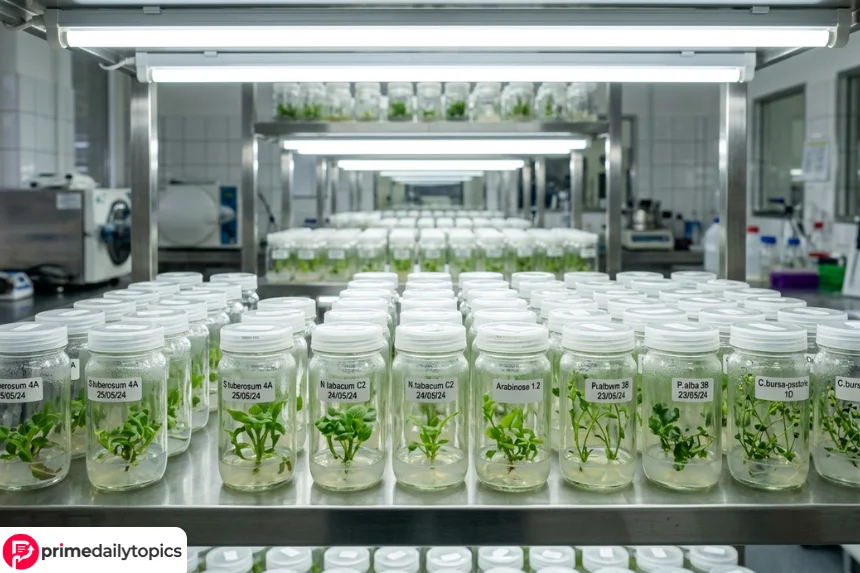
To explain the process of tissue cultures using healthy cells, begin with the basic principle: scientists take suitable living cells or a small piece of healthy tissue and maintain it outside the original organism under carefully controlled conditions. The cells receive the nutrients and environmental support they need to survive, grow, divide, or develop.
However, tissue culture is not exactly the same in every branch of biology. Animal-cell culture often involves separating cells from a tissue and maintaining them in a suitable culture vessel. Plant tissue culture, by contrast, may begin with a small piece of leaf, stem, root, bud, or another plant structure known as an explant.
Therefore, both systems share the same broad idea of controlled in vitro growth, but their procedures and goals can differ.
Quick Answer: How Does Tissue Culture Using Healthy Cells Work?
Tissue culture starts by selecting healthy biological material. Researchers then work under clean conditions, prepare the cells or tissue, and place the material explain the process of tissue cultures using healthy cells. into an appropriate nutrient medium.
Afterward, the culture is maintained under controlled environmental conditions. Scientists monitor growth, appearance, viability, and contamination. When necessary, healthy cells or tissues are transferred into fresh culture conditions so they can continue developing.
In animal research, the goal may be to expand cells for scientific study. In plant tissue culture, the process can sometimes progress from a small explant to shoots, roots, and eventually a complete plant.
Tissue Culture Process at a Glance
| Stage | What happens | Main purpose |
|---|---|---|
| Source selection | Suitable healthy tissue or cells are chosen | Provides viable starting material |
| Clean handling | Contamination is minimized | Protects the culture |
| Preparation | Tissue is prepared or cells are isolated | Makes the sample suitable for culture |
| Culture establishment | Material is placed in growth medium | Provides nutrients |
| Controlled growth | Environmental conditions are maintained | Supports survival and development |
| Monitoring | Growth and cell health are checked | Identifies problems |
| Subculture | Growing material is transferred when needed | Provides space and fresh nutrients |
| Final use | Cells are studied, stored, expanded, or regenerated | Depends on the purpose of the culture |
What Is Tissue Culture?
Tissue culture is a broad term for maintaining cells, tissues, organs, or other biological material outside the original organism under controlled laboratory conditions.
The term in vitro is commonly used for this type of work. It literally refers to biological processes studied outside the living organism in an artificial environment.
However, tissue culture and cell culture are not always identical terms.
In animal research, cell culture usually refers more specifically to cells that have been removed from their original tissue organization and maintained in an artificial environment.
ATCC, a major biological-resource organization, explains that animal cell culture involves maintaining cells in vitro after they have been removed from their original tissue environment.
For authoritative background, see the ATCC Animal Cell Culture Guide.
Plant science uses the term somewhat more broadly.
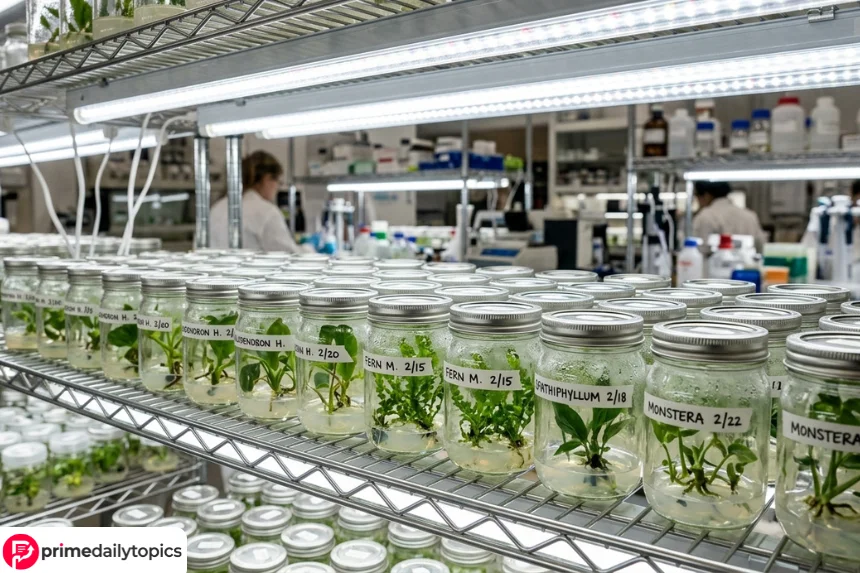
For example, plant tissue culture can involve cells, tissue pieces, organs, embryos, seeds, or other plant structures maintained under sterile conditions.
The NC State University Plant Tissue Culture Laboratory explains that plant tissue culture can support techniques such as micropropagation, organogenesis, and embryogenesis.
Therefore, understanding the biological material involved is important before describing the exact culture process.
Tissue Culture vs. Cell Culture
Although the terms overlap, they should not always be used interchangeably.
Tissue culture can include intact pieces of tissue or organs.
Cell culture, meanwhile, generally focuses on individual cells or populations of cells maintained outside their original tissue structure.
For instance, a researcher may begin with a piece of animal tissue. After cells are separated from that tissue and established in a culture vessel, the resulting system is commonly described as a primary cell culture.
In plant science, however, a small piece of intact tissue may remain the explain the process of tissue cultures using healthy cells. starting material throughout the early culture stages.
As a result, an accurate explanation should not suggest that every tissue culture begins with completely isolated cells.
Why Are Healthy Cells Important in Tissue Culture?
Healthy starting material is one of the most important factors in successful tissue culture.
Cells that are damaged, contaminated, severely stressed, or already deteriorating may grow poorly. In addition, unhealthy starting material can make laboratory results difficult to interpret.
Healthy cells generally provide:
- better viability;
- more predictable growth;
- stronger experimental consistency;
- better preservation of expected cellular characteristics;
- a lower risk of beginning with compromised biological material.
For animal-cell research, primary cells are especially important.
Primary cells are taken directly from tissues or organs and then maintained in culture. Because they are relatively close to their original biological state, researchers often use them when they want cell behavior that more closely reflects normal tissue.
The ATCC Primary Cell Culture Guide explains that primary cells can retain important physiological characteristics of their tissue of origin.
However, primary cells also have limitations.
Unlike many continuous laboratory cell lines, normal explain the process of tissue cultures using healthy cells. primary cells usually have a finite lifespan. They can divide only a limited number of times before their growth slows or stops.
Therefore, healthy starting cells do not necessarily mean unlimited cell growth.
What Does “Healthy” Mean in Cell Culture?
A healthy culture is not defined only by cells looking normal under a microscope.
Researchers consider several factors.
Healthy cultured cells should generally:
- show the expected appearance or morphology;
- demonstrate appropriate growth behavior;
- maintain acceptable viability;
- match the intended cell identity;
- remain free from microbial contamination;
- behave consistently with the expected biological model.
This last point is particularly important.
A culture may appear visually normal but still contain unwanted microorganisms.
For example, mycoplasma contamination can alter cell metabolism, proliferation, gene expression, and other biological characteristics without always producing obvious visible signs.
Because of this, maintaining healthy cultures requires more than simple visual inspection.
Good culture practice combines clean handling, appropriate biological material, routine monitoring, and suitable quality-control methods.
Step 1: Select Suitable Healthy Source Material
The first practical stage is choosing appropriate biological material.
The source depends on the type of tissue culture being performed.
Animal Cell Culture
In animal research, a primary culture may begin with cells obtained directly from healthy tissue or an organ.
The choice of tissue matters because different explain the process of tissue cultures using healthy cells. tissues contain different cell types. Furthermore, those cells may have different growth requirements once removed from the body.
A researcher studying skin cells, for example, would not expect them to behave exactly like liver, nerve, muscle, or blood-derived cells.
Therefore, the starting material must match the scientific purpose.
ATCC describes primary cell cultures as cultures established directly from tissues, organs, or cells taken from an organism.
Plant Tissue Culture
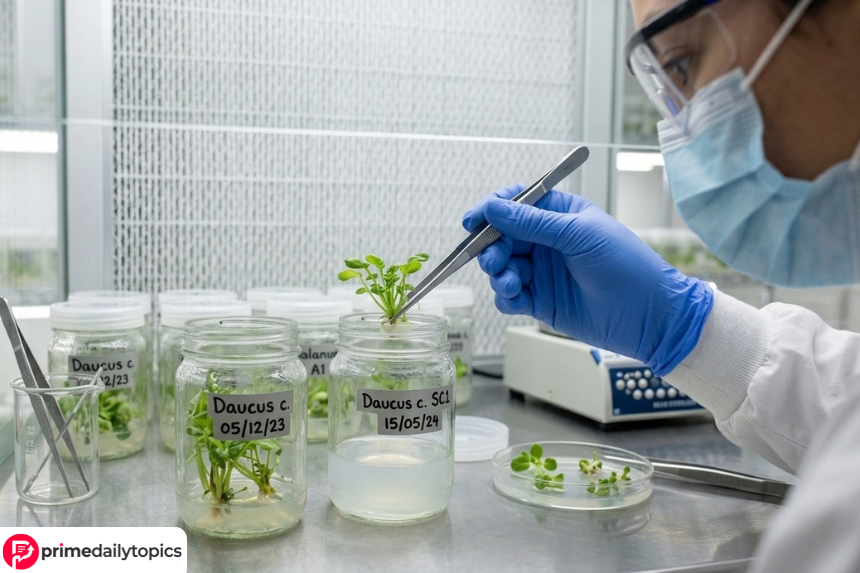
Plant tissue culture usually begins with a small section explain the process of tissue cultures using healthy cells. of plant material called an explant.
Possible explants include:
- leaves;
- shoots;
- stems;
- roots;
- buds;
- embryos;
- meristematic tissue.
The choice depends on the species and the desired result.
For example, one plant tissue may be suitable for rapid shoot multiplication, whereas another may perform better for callus formation or regeneration.
University of Florida guidance on plant tissue culture emphasizes that selecting suitable donor material is an important early stage because the condition of the source plant can affect the success of the culture.
See the UF/IFAS guidance on plant tissue culture for further background.
Step 2: Establish Clean and Aseptic Conditions
Once healthy source material has been selected, contamination control becomes essential.
Culture media are designed to support biological growth.
Unfortunately, bacteria, fungi, yeast, and other microorganisms can also use those nutrients.
If contamination enters the culture, unwanted organisms may grow faster than the intended cells. They can consume nutrients, alter the culture environment, damage cells, or make experimental results unreliable.
Therefore, scientists use aseptic technique.
Aseptic technique refers to laboratory practices designed to prevent explain the process of tissue cultures using healthy cells. unwanted microorganisms from entering the culture.
This usually involves:
- clean work areas;
- sterile or appropriately prepared equipment;
- careful handling of culture vessels;
- minimizing unnecessary exposure;
- proper laboratory hygiene;
- routine inspection for contamination.
The goal is not simply to make the culture look clean.
Instead, researchers try to protect the biological material from microorganisms that could change how the cells behave.
Why Antibiotics Are Not a Complete Solution
It may seem logical to rely on antibiotics to prevent explain the process of tissue cultures using healthy cells. every contamination problem.
However, this approach has limitations.
Antibiotics do not replace proper aseptic technique. Moreover, routine antibiotic use can sometimes conceal low-level contamination instead of eliminating the underlying problem.
Mycoplasma is particularly important because it can be difficult to detect visually.
Therefore, laboratories rely primarily on good handling practices explain the process of tissue cultures using healthy cells. and appropriate contamination testing rather than treating antibiotics as a substitute for clean technique.
Step 3: Prepare the Cells or Tissue
After the biological material has been selected and clean working conditions established, the sample must be prepared for culture.
The exact method depends on whether the researcher is working with animal cells or plant tissue.
Preparing Animal Tissue
Animal tissue contains cells held together within a complex biological structure.
Therefore, researchers often need to separate explain the process of tissue cultures using healthy cells. the desired cells from the original tissue before those cells can be maintained effectively in culture.
Once cells have been isolated and placed into an appropriate culture environment, they can establish what is known as a primary culture.
The ATCC Animal Cell Culture Guide explains that many cultured cells originate from primary cultures established from tissue that has been mechanically or otherwise appropriately dissociated.
If cells from that primary culture are later transferred successfully into a new vessel, the culture progresses into what is commonly described as a cell line.
Preparing Plant Explants
Plant tissue culture works differently.
Researchers do not always separate the plant tissue into individual cells.
Instead, a small explant may remain intact and be placed directly into plant culture medium.
Before culture begins, however, contamination on the external surface of the plant material must be controlled.
This step is especially important because plants naturally carry microorganisms on their surfaces and sometimes within their tissues.
Therefore, researchers aim to prepare the explant in a way that protects the living plant cells while reducing unwanted microbial contamination.
Once prepared, the healthy plant material is ready to enter the culture medium.
At that point, the next major question becomes: what does the culture need in order to survive and grow?
That is where the composition of the nutrient medium becomes critical.
Step 4: Place the Cells or Tissue in an Appropriate Culture Medium
Once the cells or tissue have been prepared, they need an artificial environment that can support survival and growth.
This environment is called the culture medium.
A culture medium supplies nutrients and other substances that cells would normally receive from their natural surroundings. However, there is no single universal medium for every type of tissue culture.
Different cells have different biological requirements.
Culture Media for Animal Cells
Animal-cell media commonly provide combinations of:
- salts;
- glucose or other energy sources;
- amino acids;
- vitamins;
- trace elements;
- growth factors;
- hormones;
- buffering components.
Some primary cells may also require additional supplements because they depend on specific signals that help them remain viable or continue dividing.
Therefore, researchers select the medium according to the cell type rather than using the same formulation for every culture.
The ATCC Animal Cell Culture Guide explains that culture media must provide the nutrients and environmental support required by the cells being maintained.
Culture Media for Plant Tissue
Plant tissue culture uses media designed for plant development.
These formulations commonly contain:
- mineral nutrients;
- vitamins;
- sugar;
- water;
- plant-growth regulators.
Plant hormones are especially important because they can influence whether cultured tissue forms shoots, roots, callus, or other structures.
As a result, changing the balance of growth regulators can change the developmental response of the plant tissue.
Therefore, culture medium is not simply “food” for the cells.
It also helps influence how the culture behaves.
Step 5: Maintain Controlled Environmental Conditions
After the cells or tissue are placed in culture, the environment must remain suitable for continued growth.
Several factors may need to be controlled.
These can include:
- temperature;
- pH;
- humidity;
- gas composition;
- light exposure;
- nutrient availability;
- surface conditions.
The exact settings vary with the biological material.
Environmental Needs of Animal Cells
Many animal cells require stable temperature and pH conditions.
In addition, some animal cells grow attached to a surface, while others remain suspended in the culture medium.
Cells that need a surface for attachment are known as anchorage-dependent cells.
In these cultures, the material of the culture vessel and the condition of its surface can affect how well the cells attach and grow.
Other cells, however, grow naturally in suspension.
Therefore, a researcher must understand the normal growth pattern of the cell type before choosing the culture system.
Environmental Needs of Plant Cultures
Plant tissue cultures have different requirements.
Light can influence development, while temperature and humidity can affect growth.
Furthermore, the interaction between plant-growth regulators and environmental conditions can determine whether a culture produces:
- callus;
- shoots;
- roots;
- embryos;
- complete plantlets.
For this reason, plant tissue culture depends on both the composition of the medium and the physical environment around the culture.
Step 6: Monitor the Health and Growth of the Culture
Once a culture is established, researchers must monitor it regularly.
This step is essential because cells can change over time.
Scientists may observe:
- cell shape;
- attachment;
- growth rate;
- density;
- viability;
- tissue development;
- contamination.
In animal cell culture, researchers often examine cells using a microscope.
Healthy cells generally show the expected morphology for their type. However, changes in appearance can indicate stress, overcrowding, nutrient problems, or contamination.
What Is Confluence?
In adherent animal-cell cultures, researchers often monitor confluence.
Confluence describes how much of the available culture surface has been covered by growing cells.
For example, a culture with low confluence has relatively few cells covering the surface. As the cells multiply, the percentage increases.
Once the culture becomes crowded, growth may slow or cell behavior may change.
Therefore, researchers often subculture cells before the growth surface becomes excessively crowded.
Confluence is especially useful for deciding when many adherent cultures need to be passaged.
Why Cell Appearance Is Not Enough
Visual examination is valuable, but it cannot identify every problem.
Some contaminants are obvious.
For example, bacterial or fungal contamination may cause visible cloudiness, unusual particles, or rapid changes in the medium.
However, mycoplasma contamination may be much harder to recognize.
Affected cultures can sometimes continue growing while cellular metabolism, gene expression, or proliferation changes.
Therefore, reliable quality control includes more than looking at cells under a microscope.
Researchers may use dedicated contamination tests to confirm that cultures remain clean.
Step 7: Subculture or Passage the Growing Cells
Healthy cells eventually use available nutrients and space.
When this happens, researchers may transfer part of the culture into a fresh vessel with new medium.
This process is called subculturing or passaging.
The purpose is to give the growing cells:
- more space;
- fresh nutrients;
- improved environmental conditions.
For animal cultures, this often involves reducing the density of the cells and allowing them to continue growing.
However, primary cells have a limited capacity for repeated division.
Therefore, even careful subculturing does not make normal primary cells capable of growing forever.
Why Passage Number Matters
Each time cells are transferred into a new culture vessel, the process adds another passage.
The passage number provides information about how many times the culture has been subcultured.
This matters because primary cells can gradually change as they age in culture.
For instance, higher-passage cells may show:
- slower growth;
- altered morphology;
- reduced viability;
- changes in gene expression;
- increased signs of cellular aging.
Therefore, researchers often record passage number when reproducibility is important.
Subculturing in Plant Tissue Culture
Plant tissue culture also uses subculture, although the goal can differ from animal cell culture.
A plant explant may begin producing shoots, callus, roots, or other structures.
Researchers can then divide this growing material and place it into fresh medium.
As a result, a small amount of starting tissue can produce much more plant material over time.
This is especially important in micropropagation, where the objective is to multiply selected plants rapidly under controlled conditions.
The new plant material may continue through additional stages before developing into complete plantlets.
Step 8: Maintain Quality Control
Successful tissue culture requires consistent quality control.
Researchers need to know that the culture still contains the intended biological material and that unwanted organisms have not entered the system.
Quality-control measures can include:
- checking morphology;
- monitoring growth patterns;
- confirming cell identity;
- recording passage history;
- testing for contamination;
- documenting culture conditions.
This is especially important in scientific research.
If cells are misidentified or contaminated, experimental results may become unreliable even when the culture appears normal.
Therefore, good documentation is part of tissue-culture quality, not just an administrative task.
Cell-Line Authentication
Cell-line misidentification is a well-known problem in biomedical research.
Sometimes one cell line can accidentally contaminate another.
If this happens, researchers may believe they are studying one type of cell while actually working with a different population.
For this reason, laboratories often use cell-line authentication.
Authentication helps confirm that the cells match the intended identity.
The ATCC guidance on cell authentication and culture best practices emphasizes both authentication and contamination testing as important components of reliable cell-culture work.
Why Mycoplasma Testing Matters
Mycoplasma is one of the most significant hidden contaminants in cell culture.
These organisms are extremely small and may not cause the dramatic cloudiness often associated with bacterial contamination.
As a result, a contaminated culture can sometimes appear healthy.
However, mycoplasma can alter:
- cellular metabolism;
- growth rate;
- protein production;
- gene expression;
- experimental responses.
Therefore, routine testing helps researchers detect problems before contaminated cultures are used in important experiments.
This is another reason why “healthy cells” should mean more than visually healthy cells.
What Happens When a Culture Becomes Unhealthy?
Not every culture remains successful.
Cells may become unhealthy because of:
- contamination;
- unsuitable medium;
- incorrect environmental conditions;
- excessive crowding;
- nutrient depletion;
- cellular aging;
- repeated handling stress.
Researchers then have to determine whether the culture can be recovered or whether it should be discarded.
In research settings, preserving poor-quality cultures simply to avoid starting again can create larger problems later.
Therefore, quality control helps researchers decide when a culture remains reliable enough for continued use.
Differences Between Primary Cells and Continuous Cell Lines
A useful distinction is the difference between primary cells and continuous cell lines.
Primary cells are obtained directly from an organism and generally have a finite lifespan in culture.
Continuous cell lines, by contrast, can divide for much longer periods under suitable laboratory conditions.
This difference affects how researchers manage the cultures.
| Feature | Primary Cells | Continuous Cell Lines |
|---|---|---|
| Origin | Directly from tissue or organ | Derived from cells adapted for prolonged growth |
| Biological similarity to source tissue | Often relatively high | Can differ more from original tissue |
| Lifespan in culture | Usually limited | Often very long |
| Passage sensitivity | Generally higher | Often easier to maintain |
| Typical use | Physiological studies, disease models, specialized research | Routine experiments, screening, production |
Therefore, when explaining the process of tissue cultures using healthy cells, it is important not to assume that every culture behaves like an immortal laboratory cell line.
Why Overcrowding Can Affect Cell Health
As cells divide, they can eventually occupy most of the available space.
In adherent cultures, overcrowding can affect:
- nutrient availability;
- cell-to-cell signaling;
- growth rate;
- morphology;
- experimental behavior.
Therefore, researchers monitor density and passage cells when appropriate.
However, the ideal timing differs among cell types.
Some cells tolerate high density better than others.
As a result, culture management should be based on the known behavior of the specific cell population.
Why Culture Conditions Must Stay Consistent
Even small environmental changes can influence cell behavior.
For example, differences in:
- temperature;
- medium composition;
- pH;
- passage number;
- cell density;
- incubation time
can change how cells grow or respond to experimental treatments.
Therefore, researchers try to keep conditions consistent when comparing experiments.
Good records also make it easier to identify why a culture behaves differently from previous batches.
Consistency is especially important when tissue culture is used in research that needs reproducible results.
From Healthy Culture to Final Use
Once the culture is growing successfully and quality checks are satisfactory, researchers can move to the next stage.
The final use depends on the purpose of the culture.
Animal cells may be used for:
- biological research;
- drug testing;
- toxicity studies;
- disease modeling;
- genetic studies;
- biotechnology applications.
Plant cultures may move toward:
- shoot multiplication;
- root formation;
- plant regeneration;
- conservation;
- breeding;
- commercial propagation.
Therefore, tissue culture is not the endpoint itself.
Instead, it creates controlled biological material that can be used for further research, propagation, or preservation.
Step 9: Decide the Final Outcome of the Culture
Once a culture is healthy, stable, and suitable for use, the next step depends on why it was created.
Tissue culture is not an endpoint by itself. Instead, it produces controlled biological material that researchers can use for scientific, medical, agricultural, or biotechnology purposes.
For animal cells, the cultured material may support:
- drug-development studies;
- toxicity testing;
- disease modeling;
- gene-regulation research;
- studies of tissue development;
- cell-matrix research;
- regenerative-medicine research;
- investigations of infection and inflammation.
ATCC identifies applications of primary-cell cultures in areas including toxicology, drug screening, cancer research, infection, gene regulation, and tissue development.
Plant tissue cultures may have a different outcome.
They can be used to multiply selected plants, generate shoots and roots, preserve valuable genetic material, assist breeding programs, or regenerate complete plantlets.
Therefore, the final stage depends strongly on whether researchers are working with animal cells, plant tissues, or another culture system.
Preserving Healthy Animal Cell Cultures
Scientists do not always need to keep valuable cultures actively growing.
Instead, animal cells can often be stored through cryopreservation.
Cryopreservation slows biological activity by keeping cells at very low temperatures. This allows researchers to preserve cultures for later experiments instead of continuously maintaining them.
ATCC notes that cryopreservation can help:
- create backup stocks;
- preserve cells with limited population doublings;
- reduce unnecessary continuous culture;
- protect against losing cultures through contamination or equipment problems;
- reduce changes that may accumulate during extended culture.
Many cell cultures can remain stored for long periods under suitable cryogenic conditions.
For primary cells, preservation can be particularly useful because their ability to divide is finite.
Therefore, banking healthy cells at relatively early passages can preserve useful starting material for future research. ATCC specifically notes that early-passage primary material can provide strong viability and plating performance.
What Happens to Plant Tissue Cultures?
Plant tissue culture can continue beyond simple multiplication.
Under appropriate conditions, cultured plant tissues may develop shoots and then roots.
Eventually, rooted plantlets can leave the protected in vitro environment.
However, this transition cannot always happen immediately.
Plants growing inside culture vessels experience conditions that differ considerably from those outside the laboratory. For example, humidity can be high, while their exposure to normal environmental stresses remains limited.
Therefore, plantlets generally need an acclimatization stage.
UF/IFAS describes acclimatization as the final stage of micropropagation. During this stage, rooted plantlets gradually adjust to normal greenhouse conditions.
As the plants adapt, humidity is gradually reduced and exposure to normal light and growing conditions increases.
Consequently, successful plant tissue culture does not end the moment roots appear.
The young plant must also become capable of surviving outside the culture vessel.
Animal Cell Culture vs. Plant Tissue Culture
The phrase “tissue culture” can refer to several related laboratory techniques.
However, animal cell culture and plant tissue culture should not be presented as identical processes.
Their underlying principle is similar: biological material is maintained outside the organism under controlled conditions.
Nevertheless, their goals and biological responses can differ substantially.
| Feature | Animal Cell Culture | Plant Tissue Culture |
|---|---|---|
| Typical starting material | Isolated cells or tissue-derived cells | Explant, organ, tissue, or plant cells |
| Common goal | Maintain or expand cells for research | Multiply or regenerate plant material |
| Growth form | Attached cells or suspension culture | Callus, shoots, roots, embryos, plantlets |
| Expansion method | Passaging/subculturing | Multiplication and transfer of tissue |
| Lifespan | Primary cells usually have finite division capacity | Depends on species, tissue, and culture pathway |
| Common final use | Research, screening, biotechnology | Propagation, research, breeding, conservation |
| Whole-organism regeneration | Usually not the purpose | Whole plants may be regenerated |
This distinction makes the explanation scientifically clearer.
For example, ATCC emphasizes that primary animal cells have a limited number of divisions before senescence.
Plant micropropagation, meanwhile, can progress through establishment, multiplication, rooting, and acclimatization until complete plants are produced.
Therefore, the phrase “using healthy cells” should be understood according to the biological system being discussed.
What Are Primary Cells?
Primary cells are cells obtained relatively directly from living tissue and then maintained outside the organism.
They are important because they can retain many characteristics of the original tissue.
ATCC explains that primary cultures often more closely represent the physiological condition of cells in vivo than continuously growing cell lines.
For this reason, scientists may select primary cells when they want to investigate biological behavior that resembles normal tissue more closely.
However, this advantage comes with limitations.
Primary cells commonly have:
- finite lifespans;
- more demanding growth requirements;
- greater sensitivity to handling;
- donor-to-donor variability;
- more limited availability;
- increased challenges in obtaining consistent batches.
Therefore, primary cells can offer strong biological relevance, but they may require more careful management than established continuous cell lines.
Primary Cells vs. Continuous Cell Lines
The difference between these two cell sources is important when trying to explain the process of tissue cultures using healthy cells.
| Characteristic | Primary Cells | Continuous Cell Lines |
| Relationship to original tissue | Usually closer | May differ substantially over time |
| Division capacity | Limited | Can proliferate for very long periods |
| Experimental consistency | May vary between donors | Often easier to standardize |
| Culture difficulty | Often higher | Often easier |
| Biological relevance | Frequently high for normal physiology | Depends on the research question |
| Long-term expansion | Limited | Usually much greater |
Neither option is automatically “better.”
Instead, the correct choice depends on the purpose of the experiment.
A researcher examining normal cellular physiology may value primary cells because they can retain characteristics of the tissue of origin.
Another project may require large quantities of highly standardized cells, making an established cell line more practical.
Thus, cell choice should follow the research question rather than a simple assumption that one culture type is universally superior.
Major Applications of Healthy Cell and Tissue Cultures
Tissue-culture methods have become central tools across modern biology.
Drug Discovery and Testing
Cultured cells allow scientists to observe how biological systems respond to candidate compounds.
Researchers can study cellular changes under controlled conditions before moving into more complex experimental models.
ATCC identifies drug screening and development among the established applications of cell culture.
Toxicology
Cultured cells can help researchers investigate whether a substance causes cellular stress, injury, or other measurable biological changes.
Therefore, cell-based systems have important uses in toxicity research.
Disease Research
Scientists can use cultured cells to investigate mechanisms associated with diseases.
Depending on the model, researchers may examine cancer biology, infections, inflammation, genetic changes, or other processes.
However, results from cultured cells do not automatically reproduce everything that occurs inside a complete human or animal body.
Therefore, cell culture should be understood as a research model rather than a perfect replacement for whole-organism biology.
Regenerative Medicine
Cell culture also plays a role in regenerative-medicine research.
Scientists may study how cells grow, differentiate, interact with surrounding structures, or respond to biological signals.
ATCC includes regenerative medicine among the broader applications of cultured cells.
Plant Propagation
In agriculture and horticulture, tissue culture can rapidly multiply selected plants.
Micropropagation is particularly useful when large numbers of genetically similar plants are desired from relatively small amounts of starting material.
UF/IFAS describes micropropagation as plant propagation through tissue culture and divides the process into donor selection, establishment, multiplication, rooting, and acclimatization.
Plant Conservation
Tissue culture may also support conservation programs involving valuable or difficult-to-propagate plants.
Because relatively small amounts of plant material can be multiplied under controlled conditions, the technique can help maintain plant genetic resources.
Advantages of Tissue Culture
Tissue culture offers several important advantages.
First, it creates a controlled environment.
Researchers can manipulate conditions while reducing some of the complexity present inside an entire organism.
Second, cultures provide direct access to cells.
This makes microscopic observation and experimental measurement easier.
Third, healthy cultures can often be expanded.
Therefore, researchers may obtain enough biological material for repeated experiments.
Fourth, valuable animal cultures can be cryopreserved.
This allows scientists to return to stored material rather than continuously maintaining every culture.
Finally, plant tissue culture can multiply relatively small amounts of plant material into many plants.
These advantages explain why tissue culture has become widely used across research and plant propagation.
Limitations of Tissue Culture
Despite its usefulness, tissue culture has important limitations.
Cells Are Outside Their Natural Environment
A culture dish does not perfectly reproduce the conditions inside a complete organism.
Cells normally communicate with other cell types, extracellular structures, blood vessels, hormones, immune components, and numerous chemical signals.
Removing them from that environment can change their behavior.
Therefore, results obtained in vitro need appropriate interpretation.
Primary Cells Have a Limited Lifespan
Healthy primary animal cells generally cannot divide indefinitely.
After a limited number of divisions, they eventually enter cellular senescence.
ATCC specifically identifies this finite division capacity as one of the basic properties of primary cells.
Cultures Can Change Over Time
Extended culture can alter cellular characteristics.
Consequently, passage history and culture conditions matter when researchers compare results.
Contamination Remains a Risk
Bacteria, fungi, mycoplasma, or other unwanted biological material can interfere with cultures.
Furthermore, contamination is not always immediately visible.
Therefore, quality-control practices remain essential throughout the culture’s lifetime.
Primary Cultures Can Vary
Primary cells from different donors may not behave identically.
ATCC notes that donor availability, cell isolation, quality assurance, and variability can complicate primary-cell research.
Thus, biological relevance may come with greater variability.
Is Tissue Culture the Same as Cloning?
Not necessarily.
The terms sometimes overlap in plant propagation, but they should not automatically be treated as synonyms.
Plant micropropagation can generate many plants from selected source material. Depending on the method, those plants may be genetically very similar to the donor plant.
However, tissue culture itself simply refers to maintaining or growing biological material under controlled in vitro conditions.
Animal cell culture also does not automatically mean cloning an animal.
Researchers may grow millions of cells without attempting to create an entire organism.
Therefore, saying that “tissue culture is cloning” is too broad.
Does Tissue Culture Always Start With Individual Healthy Cells?
No.
This is another common misconception.
Animal primary culture may eventually involve dispersed individual cells. However, the starting material can be tissue taken from an organ.
Plant tissue culture even more clearly demonstrates the difference.
It frequently starts with an explant, which is an intact piece of plant tissue rather than a collection of isolated individual cells.
Therefore, “healthy cells” can refer either to isolated viable cells or to healthy cells contained within a small tissue sample.
Does Tissue Culture Make Cells Immortal?
No.
Normal primary cells generally have a limited capacity to divide.
Eventually, they stop proliferating.
Continuous or immortalized cell lines behave differently because they have acquired or been given characteristics that permit extended proliferation.
ATCC distinguishes primary cultures, which have finite proliferation, from continuous cell lines capable of much more prolonged growth.
Therefore, healthy tissue culture should not be described as a method for automatically making normal cells live forever.
Can Tissue Culture Produce a Whole Plant?
Yes, some forms of plant tissue culture can regenerate complete plants.
Under appropriate conditions, cultured tissues may produce shoots and roots.
After rooting, the resulting plantlets can undergo acclimatization before being transferred to more normal growing conditions.
UF/IFAS identifies rooting and acclimatization as the final stages of plant micropropagation.
However, not every plant species or tissue responds equally well.
Regeneration success depends on factors such as the species, explant type, physiological condition, medium, and developmental pathway.
Frequently Asked Questions
What is the basic process of tissue culture using healthy cells?
The process begins with suitable living biological material. Researchers establish clean conditions, prepare the material, provide an appropriate culture environment, monitor growth and quality, expand the culture when necessary, and then use or preserve the resulting cells or tissues.
Why are healthy cells used in tissue culture?
Healthy cells are more likely to survive, grow predictably, and provide meaningful experimental results.
However, researchers also need to confirm cell identity and contamination status because cells that appear visually healthy may still have quality problems.
What is the difference between tissue culture and cell culture?
Tissue culture is the broader term. It can involve cells, tissue pieces, organs, or plant explants.
Cell culture usually refers more specifically to cells maintained outside their original tissue organization.
Therefore, all cell culture can broadly fall within tissue-culture methods, but not every tissue culture consists only of isolated cells.
What is a primary cell culture?
A primary cell culture is established relatively directly from cells or tissue obtained from an organism.
Primary cells often retain characteristics that resemble their tissue of origin. Nevertheless, their capacity for division is generally limited.
What is an explant in plant tissue culture?
An explant is a small piece of plant material used to start a tissue culture.
Depending on the goal, it may come from a leaf, bud, stem, shoot, root, embryo, or another suitable plant structure.
Why is contamination dangerous in tissue culture?
Contaminating microorganisms can consume nutrients, damage cells, alter cellular behavior, and make research findings unreliable.
As a result, aseptic handling and quality control are important throughout the culture process.
What does subculture mean?
Subculture, or passaging, refers to transferring part of a growing culture into new culture conditions.
This provides additional space and resources for continued growth.
However, passaging does not make normal primary cells immortal.
What happens after plant tissue culture?
Plant tissues may be multiplied, encouraged to form roots, and developed into plantlets.
Afterward, those plantlets undergo acclimatization so they can adjust from protected in vitro conditions to a normal greenhouse or growing environment.
Can healthy cultured cells be stored?
Yes. Many animal cell cultures can be preserved through cryopreservation.
This allows laboratories to maintain backup stocks and preserve valuable cell material for future work.
What are tissue cultures used for?
Uses include drug research, toxicology, disease modeling, gene-regulation studies, regenerative-medicine research, biotechnology, plant propagation, breeding, and conservation.
Are primary cells better than cell lines?
Not in every situation.
Primary cells can better preserve some physiological features of their source tissue. However, they usually have limited lifespans and may vary between donors.
Continuous cell lines are often easier to grow and standardize.
Therefore, researchers select the model that best fits the scientific question.
Conclusion
To explain the process of tissue cultures using healthy cells, it is important to understand that tissue culture is a controlled biological system rather than a single laboratory step.
Healthy biological material forms the starting point. Researchers then establish conditions that allow cells or tissues to survive and develop outside the original organism.
Throughout the culture’s life, careful monitoring, quality control, and appropriate handling help maintain useful biological material.
However, animal and plant tissue cultures do not have identical outcomes.
Animal primary cells are commonly expanded and used for research, although their capacity for division is finite. Plant tissue cultures, meanwhile, can sometimes progress from a small explant through multiplication, rooting, and acclimatization to produce complete plants.
Ultimately, tissue culture provides scientists with a controlled way to study, preserve, multiply, or use living biological material. Its value depends not only on starting with healthy cells, but also on maintaining their identity, viability, and quality throughout the culture process.
