



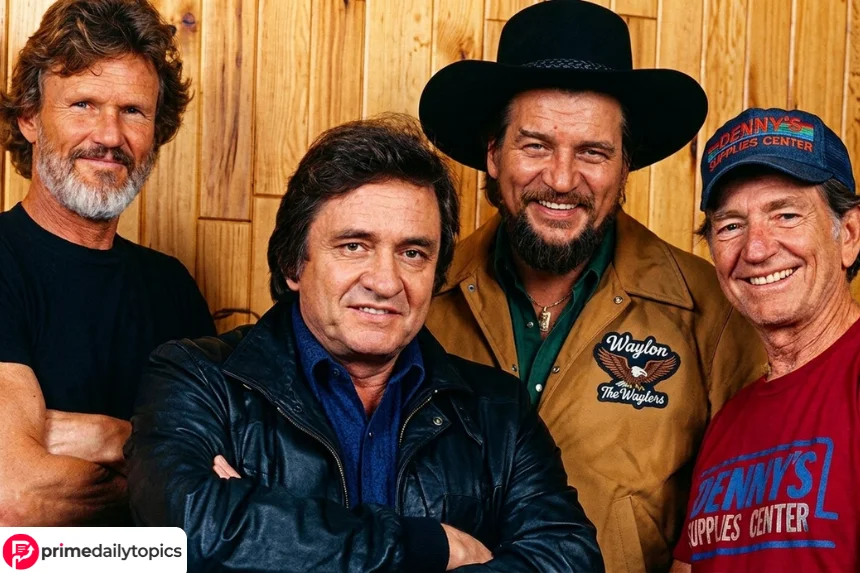
Who were the Highwaymen? They were a country music supergroup made up of Johnny Cash, Willie Nelson, Waylon Jennings, and Kris Kristofferson. Formed in 1985, the quartet brought together four established stars of outlaw country, recorded three studio albums, toured internationally, and scored a No. 1 country hit with “Highwayman.”
The name can cause confusion because “highwaymen” also means historical road robbers, and other music and film projects have used the same title. However, searches for who were the Highwaymen most often refer to the country group whose members were already legends before they began recording together.
Quick Facts About the Country Supergroup
| Topic | Verified information |
|---|---|
| Group | The Highwaymen |
| Members | Johnny Cash, Willie Nelson, Waylon Jennings, and Kris Kristofferson |
| Formed | 1985 |
| Roots of the collaboration | A 1984 Christmas television special in Montreux, Switzerland |
| Main genre | Country and outlaw country |
| Active group period | 1985–1995 |
| Debut album | Highwayman (1985) |
| Second album | Highwayman 2 (1990) |
| Third album | The Road Goes On Forever (1995) |
| Signature song | “Highwayman” |
| Songwriter of “Highwayman” | Jimmy Webb |
| Major chart achievement | “Highwayman” reached No. 1 on the country chart |
| Film appearance | Stagecoach (1986) |
| Surviving member in 2026 | Willie Nelson |
| Group identity | Widely described as country music’s first bona fide supergroup |
The Country Supergroup Explained
In essence, the Highwaymen were four major American country artists who joined their individual voices and reputations in one group. Each member had already built a successful solo career, so the collaboration did not function like a conventional new band trying to become famous.
Instead, the four men brought established catalogs, stage identities, and audiences into a shared project. The PBS American Masters profile of the Highwaymen describes them as a pioneering outlaw country supergroup established in 1985.
Their performances often alternated between group recordings and the members’ solo standards. Therefore, a Highwaymen concert could include “Highwayman” alongside songs associated with Cash, Nelson, Jennings, or Kristofferson.
The Four Original Members
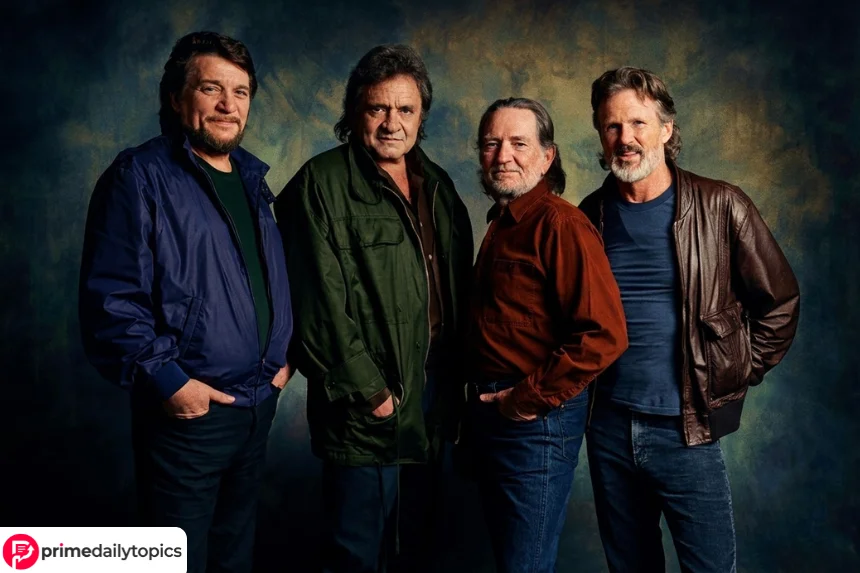
Specifically, the four members were:
- Johnny Cash
- Willie Nelson
- Waylon Jennings
- Kris Kristofferson
They were not selected because they sounded identical. In fact, their contrasting voices became one of the group’s defining strengths.
Cash supplied a deep, commanding baritone. Nelson used relaxed phrasing and a distinctive nasal tone. Jennings brought a forceful, gritty delivery. Meanwhile, Kristofferson contributed a weathered voice and the perspective of one of Nashville’s most respected songwriters.
How the Group Formed
First, the group’s roots reach back to a 1984 Christmas television production in Montreux, Switzerland.
Cash, Nelson, Jennings, and Kristofferson were already friends and occasional collaborators. During the production, the musicians and their families spent time together away from the usual pressures of Nashville and touring.
The PBS account of the Montreux gathering says they came together for a Christmas special and developed a family-like bond. Informal music-making in hotel rooms helped reveal how naturally their personalities and repertoires fit.
Subsequently, producer Chips Moman worked with them on the album that became Highwayman. The project succeeded because the collaboration grew from friendship and mutual respect rather than from a manufactured casting plan.
When Did the Collaboration Officially Begin?
Ultimately, the Highwaymen officially formed in 1985.
Their first album arrived that year, and the group remained active through 1995. PBS identifies the decade from 1985 to 1995 as their primary period together.
Nevertheless, their personal and musical relationships existed before the group and continued afterward. Several members had recorded, toured, acted, or written songs with one another long before the Highwaymen name became established.
How the Group Got Its Name
In turn, the name grew from the success of the song “Highwayman,” written by Jimmy Webb.
The recording assigns each member a different character in a continuing cycle of life: a highway robber, a sailor, a dam builder, and a futuristic traveler. The four-part structure made the song unusually well suited to four distinct singers.
Initially, the debut album prominently presented the artists’ individual names. Over time, audiences and the music industry adopted the Highwaymen as the group identity.
Johnny Cash’s Role in the Group
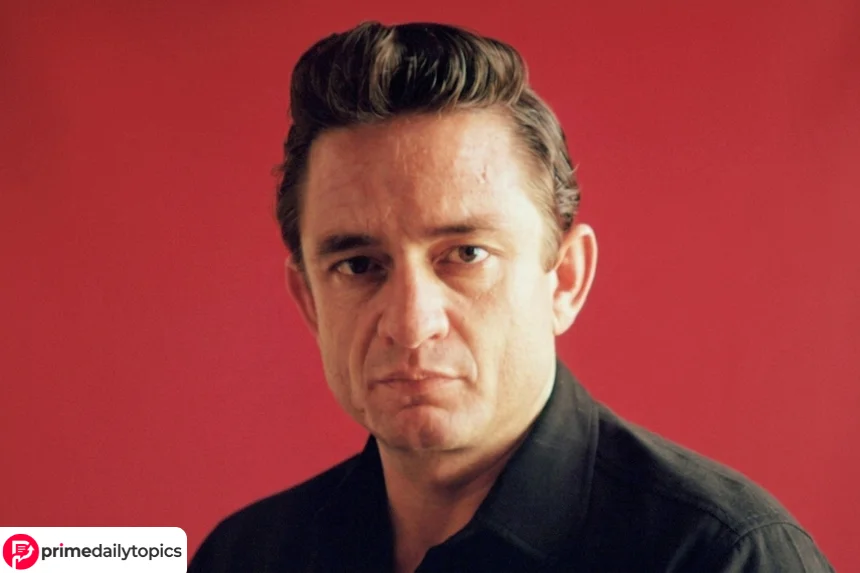
Above all, Johnny Cash was the group’s deep-voiced anchor and one of the most recognizable figures in American music.
Before the Highwaymen, Cash had created classics including “I Walk the Line,” “Folsom Prison Blues,” “Ring of Fire,” and “A Boy Named Sue.” He also connected country music with gospel, folk, rockabilly, prison reform, television, and American storytelling.
The Country Music Hall of Fame profile of Johnny Cash notes that he earned a No. 1 hit with the title track of Highwayman and recorded two more albums with Nelson, Jennings, and Kristofferson.
Within the group, Cash’s gravity balanced the looser vocal styles of Nelson and Kristofferson. Moreover, his long relationships with the other members gave the quartet emotional credibility.
Cash died on September 12, 2003, at age 71.
Willie Nelson’s Role in the Group
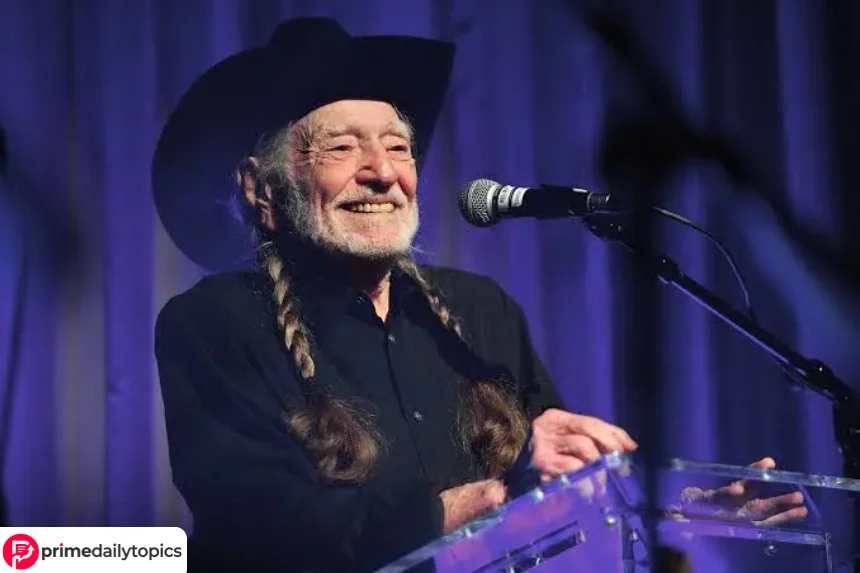
By contrast, Willie Nelson brought fluid guitar playing, conversational phrasing, and a strong independent identity to the group.
Before the Highwaymen formed, Nelson had already written or recorded songs such as “Crazy,” “Night Life,” “Blue Eyes Crying in the Rain,” “On the Road Again,” and “Always on My Mind.” He also helped reshape country music by leaving Nashville’s restrictive studio system and building a new creative home in Texas.
The Country Music Hall of Fame profile of Willie Nelson describes him as one of country music’s most versatile, enduring, and influential artists.
Nelson often gave Highwaymen performances an informal, spontaneous quality. In addition, his guitar Trigger and behind-the-beat vocal style made his sections instantly recognizable.
As of August 2026, Willie Nelson is the only surviving Highwaymen member. His official website continued to list 2026 performances and releases, showing that he remained professionally active at age 93.
Waylon Jennings’s Role in the Group
Likewise, Waylon Jennings brought a muscular voice and a direct connection to the outlaw country movement.
Jennings had challenged Nashville’s producer-controlled recording system by demanding the freedom to choose his songs, musicians, arrangements, and studios. His solo catalog included “Are You Sure Hank Done It This Way,” “I’m a Ramblin’ Man,” “Luckenbach, Texas,” and “Good Hearted Woman.”
The Country Music Hall of Fame explains that the “outlaw” label reflected Jennings’s fight for creative control rather than criminal behavior.
In the Highwaymen, Jennings supplied power, humor, and an unpolished edge. However, he also helped hold the group together through his long friendships with Cash and Nelson.
Jennings stopped regular touring in the late 1990s. He died on February 13, 2002, at age 64 from complications related to diabetes.
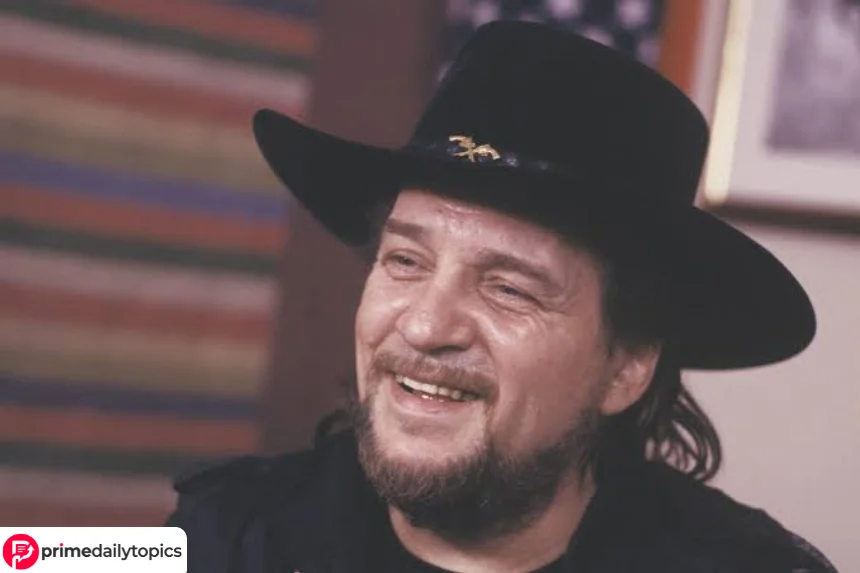
Kris Kristofferson’s Role in the Group
Finally, Kris Kristofferson was the group’s poet, actor, and philosophical songwriter.
A Rhodes Scholar and former Army officer, he left a possible academic and military career to write songs in Nashville. His compositions included “Me and Bobby McGee,” “Help Me Make It Through the Night,” “For the Good Times,” and “Sunday Mornin’ Comin’ Down.”
The Country Music Hall of Fame identifies “Highwayman” as a major later-career success and confirms Kristofferson’s place in the four-man supergroup.
Kristofferson’s rough vocal style differed from polished mainstream singing. Nevertheless, his emotional directness, literary instincts, and admiration for the other members strengthened the group’s chemistry.
He died on September 28, 2024, at age 88. Consequently, Willie Nelson became the last surviving member.

Their Place in Outlaw Country
More broadly, outlaw country was a movement associated with artists who demanded greater control over their recordings and careers.
The word “outlaw” did not mean that the musicians belonged to a criminal gang. Instead, it described their resistance to the highly controlled Nashville recording system of the 1960s and early 1970s.
Artists connected with the movement often wanted to:
- Choose their own songs
- Use their preferred musicians
- Record outside label-controlled studios
- Produce or shape their own albums
- Combine country with rock, folk, blues, and regional sounds
- Present less polished and more personal material
Waylon Jennings and Willie Nelson became central figures in that movement. Cash and Kristofferson shared its independence, outsider themes, and resistance to easy categorization.
Therefore, the Highwaymen represented outlaw country as an artistic attitude rather than a single musical formula.
The Debut Album
To begin with, the group released Highwayman in 1985.
The official Johnny Cash album page for Highwayman lists ten tracks and identifies Chips Moman as producer. The record included:
- “Highwayman”
- “The Last Cowboy Song”
- “Jim, I Wore a Tie Today”
- “Big River”
- “Committed to Parkview”
- “Desperados Waiting for a Train”
- “Deportee”
- “Welfare Line”
- “Against the Wind”
- “The Twentieth Century Is Almost Over”
The album reached No. 92 on the Billboard 200 and remained on that chart for 35 weeks. However, its importance exceeded that modest pop-album peak because the title song became a major country hit and established the group’s identity.
Why Was “Highwayman” So Important?
Importantly, Jimmy Webb wrote “Highwayman” before the supergroup existed.
The song follows one consciousness through four different lives. Each singer performs one incarnation, so the structure gives every member a clear dramatic role while connecting all four voices through a single theme.
The recording reached No. 1 on the country chart. Moreover, the song won the 1986 Grammy Award for Best Country Song for Webb, the songwriter. The Highwaymen’s performance received a separate Grammy nomination for country group vocal performance but did not win that category.
This distinction matters because many articles incorrectly say that the quartet won a performance Grammy for the recording.
Which Highwayman Sang Which Verse?
The well-known arrangement assigns the characters as follows:
| Member | Character |
| Willie Nelson | The highwayman |
| Kris Kristofferson | The sailor |
| Waylon Jennings | The dam builder |
| Johnny Cash | The futuristic traveler |
The sequence moves from the historical past to an imagined future. As a result, the song turns the traditional outlaw image into a broader meditation on death, survival, and return.
The Second Studio Album
Five years later, the group released Highwayman 2 in 1990.
The album included “Silver Stallion,” “Born and Raised in Black and White,” “American Remains,” “Living Legend,” and “Texas.” Chips Moman again served as producer.
Highwayman 2 reached No. 79 on the Billboard 200 and remained there for 13 weeks. It also received a Grammy nomination for Country Collaboration with Vocal.
Although the second album did not produce another signature hit as famous as “Highwayman,” it strengthened the quartet’s identity. In particular, “Silver Stallion” and “American Remains” became enduring parts of the group’s catalog.
The Final Studio Album
Then, the third studio album, The Road Goes On Forever, arrived in 1995.
Don Was produced the original release. Its songs included:
- “The Devil’s Right Hand”
- “Live Forever”
- “Everyone Gets Crazy”
- “It Is What It Is”
- “I Do Believe”
- “The End of Understanding”
- “True Love Travels a Gravel Road”
- “Death and Hell”
- “Waiting for a Long Time”
- “Here Comes That Rainbow Again”
- “The Road Goes On Forever”
The album placed greater emphasis on songs written by the group’s members and respected writers from the wider country and Americana tradition.
Commercially, it did not match the impact of the first album. Artistically, however, it offered a reflective final studio statement about mortality, belief, friendship, and endurance.
Complete Studio Discography
The Highwaymen made three major-label studio albums:
| Album | Year | Key tracks |
| Highwayman | 1985 | “Highwayman,” “Desperados Waiting for a Train,” “Big River” |
| Highwayman 2 | 1990 | “Silver Stallion,” “American Remains,” “Living Legend” |
| The Road Goes On Forever | 1995 | “Live Forever,” “The Devil’s Right Hand,” title track |
Later compilations and live releases expanded the catalog. However, those three records form the core studio discography.
Best-Known Songs
The group’s best-known songs include:
- “Highwayman”
- “Silver Stallion”
- “Desperados Waiting for a Train”
- “The Last Cowboy Song”
- “American Remains”
- “Live Forever”
- “The Road Goes On Forever”
- “Born and Raised in Black and White”
- “The Devil’s Right Hand”
- “Big River”
Their concerts also featured major solo songs. Therefore, live set lists could include “Ring of Fire,” “Always on My Mind,” “Me and Bobby McGee,” “Luckenbach, Texas,” “Folsom Prison Blues,” and “On the Road Again.”
Live Performances and Concert Style
In practice, Highwaymen concerts worked as both group shows and celebrations of four individual careers.
The artists often stood together for ensemble songs, then gave one another space for solo standards. They traded verses, harmonized selectively, told stories, and relied on the audience’s familiarity with each performer.
A major example is their March 14, 1990, concert at Nassau Coliseum in New York. The official American Outlaws live collection preserves that concert along with Farm Aid performances and other material.
The set demonstrates the group’s unusual advantage: they could draw from several of the most recognizable catalogs in country music without depending only on Highwaymen studio songs.
Their Appearance in Stagecoach
Yes. In addition, all four appeared in the 1986 television film Stagecoach.
The production adapted the Western story previously associated with the classic 1939 John Ford film. Nelson played Doc Holliday, Kristofferson played the Ringo Kid, Cash played Marshal Curly Wilcox, and Jennings portrayed Hatfield.
The acting project fit the group’s public image because all four had strong connections to Western storytelling. Cash, Nelson, and Kristofferson already had substantial acting experience, while Jennings was also familiar to television audiences.
Nevertheless, Stagecoach should be viewed as a separate screen collaboration rather than a factual account of the band.
Why the Group Became Inactive
Notably, there was no single dramatic breakup.
The group’s members maintained solo careers throughout the collaboration. Consequently, touring required coordinating four schedules, bands, business teams, health needs, and personal commitments.
By the late 1990s, health problems increasingly limited Jennings and Cash. Jennings stopped touring regularly, while Cash’s neurological and physical conditions restricted live performance.
The primary group period had already ended with The Road Goes On Forever in 1995. Therefore, the Highwaymen gradually became inactive rather than announcing a hostile split.
Surviving Members in 2026
Yes. As of August 2026, Willie Nelson is the only surviving member.
| Member | Born | Died |
| Johnny Cash | 1932 | 2003 |
| Willie Nelson | 1933 | Living as of August 2026 |
| Waylon Jennings | 1937 | 2002 |
| Kris Kristofferson | 1936 | 2024 |
Nelson remained active in 2026, with concerts and new music listed through his official channels. However, the original Highwaymen cannot reunite because Cash, Jennings, and Kristofferson have died.
Musical Importance and Lasting Influence
Most importantly, the group mattered because it placed four independent careers into a collaboration without erasing their differences.
Their importance includes:
- Establishing a model for veteran-artist supergroups
- Preserving and renewing outlaw country
- Introducing older songs to new audiences
- Demonstrating the value of artistic friendship
- Blending solo hits with ensemble storytelling
- Giving four contrasting voices equal narrative space
- Influencing later collaborative projects in country and roots music
The group also challenged assumptions about aging musicians. Rather than presenting the members as nostalgia acts, Highwayman gave them a major new hit and a shared identity.
Influence on Later Supergroups
The Highwaymen helped prove that famous solo artists could create a convincing group with its own sound and mythology.
Later projects differed in style and origin, but listeners often compare the Highwaymen with the Traveling Wilburys and other star collaborations. Country music also produced groups such as the Notorious Cherry Bombs, the Old Dogs, and the Highwomen.
However, the Highwaymen remain distinctive because each member represented a major branch of American songwriting and outlaw country history.
The Historical Meaning of “Highwaymen”
Historically, however, highwaymen were robbers who stopped travelers on public roads, often while riding horses and carrying weapons.
The Oxford Learner’s Dictionary definition of a highwayman describes a man, usually mounted and armed, who stole from road travelers in the past.
The country group borrowed the romantic image of a wandering outlaw. However, Cash, Nelson, Jennings, and Kristofferson were musicians, not a band of road criminals.
Reality Versus Romantic Legend
Popular culture often portrayed historical highwaymen as bold, stylish rebels. In reality, armed robbery could involve intimidation, violence, injury, and death.
Figures such as Dick Turpin later became romantic legends, but the historical crimes were dangerous rather than harmless adventures.
Therefore, the word carries two different associations: a real history of robbery and a fictional image of independence. The country group drew mainly from the second association.
Other Meanings of “The Highwaymen”
Additionally, the title can refer to several unrelated subjects.
The 1960s Folk Group
A folk group called the Highwaymen formed at Wesleyan University in 1958. According to the Library of Congress Highwaymen collection, its original members included Bob Burnett, Steve Butts, Chan Daniels, Dave Fisher, and Steve Trott.
That group became known for “Michael, Row the Boat Ashore.” It was not connected to Cash, Nelson, Jennings, and Kristofferson.
The Netflix Film
The Highwaymen is also a 2019 Netflix crime film about lawmen Frank Hamer and Maney Gault pursuing Bonnie Parker and Clyde Barrow.
Kevin Costner and Woody Harrelson starred in the film. It has no connection to the country supergroup.
The Florida Highwaymen Artists
“The Highwaymen” can also refer to a group of African American landscape painters in Florida who sold vivid paintings along roads and through local businesses beginning in the mid-20th century.
Therefore, capitalization and context matter. A search involving Johnny Cash, Willie Nelson, Waylon Jennings, or Kris Kristofferson refers to the country group.
Common Myths and Misconceptions
Myth: The Highwaymen were a normal band formed by unknown musicians. All four members were established solo stars before the group formed.
Myth: “Outlaw country” meant they were criminals. The label mainly referred to artistic independence and resistance to Nashville’s controlled production system.
Myth: They recorded only one album. They released three studio albums between 1985 and 1995.
Myth: Johnny Cash wrote “Highwayman.” Jimmy Webb wrote the song.
Myth: The group won the Grammy for its vocal performance of “Highwayman.” The recording received a performance nomination, while Webb won Best Country Song as the songwriter.
Myth: Willie Nelson, Waylon Jennings, Johnny Cash, and Kris Kristofferson all sang the same verse. Each member performed a different character.
Myth: The Highwaymen formally broke up after a major feud. The group gradually became inactive as members continued solo work and faced health problems.
Myth: The 1960s folk Highwaymen were the same group. They were a separate ensemble formed decades earlier.
FAQs About the Highwaymen
1. Who Were the Highwaymen?
The Highwaymen were Johnny Cash, Willie Nelson, Waylon Jennings, and Kris Kristofferson, four country stars who formed a supergroup in 1985.
2. Why Were They Called the Highwaymen?
Their name came from the success of “Highwayman,” a Jimmy Webb song built around four characters and four vocal parts.
3. What Type of Music Did the Highwaymen Play?
They played country music, especially outlaw country, while also drawing from folk, gospel, Western, rock, and American story songs.
4. What Was the Highwaymen’s Biggest Hit?
“Highwayman” was their biggest hit. It reached No. 1 on the country chart.
5. How Many Albums Did the Highwaymen Release?
They released three studio albums: Highwayman, Highwayman 2, and The Road Goes On Forever.
6. Who Wrote the Song “Highwayman”?
Jimmy Webb wrote “Highwayman.” His composition won the 1986 Grammy Award for Best Country Song.
7. Were the Highwaymen Friends?
Yes. Their collaboration grew from long friendships, earlier musical connections, and time spent together during a 1984 Christmas production in Montreux.
8. Did the Highwaymen Act Together?
Yes. The four members appeared in the 1986 television film Stagecoach.
9. Which Highwaymen Members Are Still Alive?
Willie Nelson is the only surviving member as of August 2026.
10. Were the Highwaymen Real Outlaws?
No. They were musicians. “Outlaw” described their independent approach to country music, although the group name also referenced the historical image of road robbers.
Conclusion: Who Were the Highwaymen and Why Do They Matter?
Who were the Highwaymen? They were Johnny Cash, Willie Nelson, Waylon Jennings, and Kris Kristofferson—four individual country legends who created a convincing shared identity.
From 1985 through 1995, they released three studio albums, toured together, appeared in Stagecoach, and turned Jimmy Webb’s “Highwayman” into a No. 1 country hit. Their contrasting voices made the song and group work: Nelson sounded conversational, Kristofferson reflective, Jennings forceful, and Cash monumental.
Moreover, their legacy rests on friendship and creative independence. The Highwaymen showed that established artists could collaborate without surrendering their individual identities. As a result, they remain one of the most respected supergroups in American music.
Read more at Prime Daily Topics
