



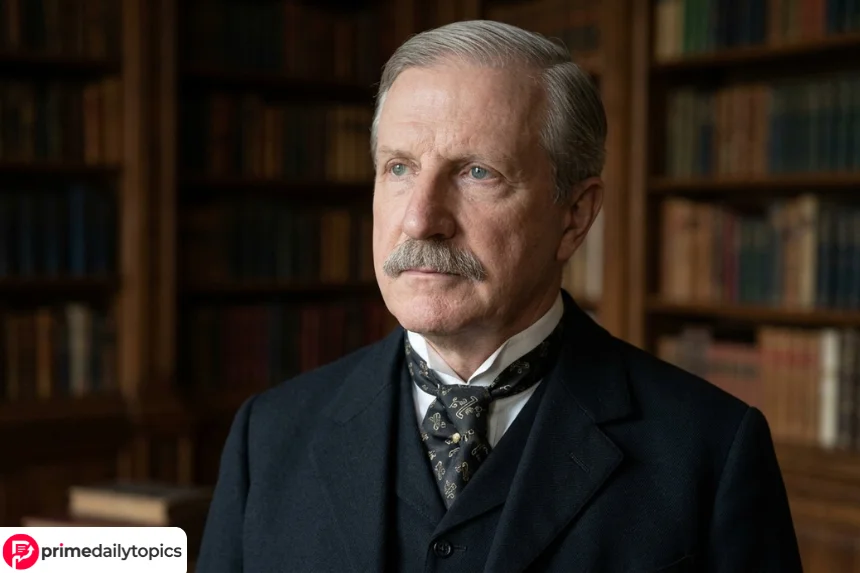
William Rockefeller Sr. was John D. Rockefeller’s father, a traveling patent-medicine seller and trader who lived from 1810 to 1906. He also used the name Dr. William Levingston and became known as “Devil Bill.” However, he was not the William Rockefeller who co-founded Standard Oil.
That distinction matters because online biographies often merge two men. William Avery Rockefeller Sr. was the father, while William Avery Rockefeller Jr. was his son and John D. Rockefeller’s business partner. Therefore, Standard Oil titles, railroad investments, a 1922 death, and reports of a roughly $100 million estate belong to William Jr., not William Sr.
For readers checking records, the dates resolve the problem quickly: the father died in 1906, while the oil executive lived until 1922. Moreover, a source describing Standard Oil leadership almost certainly concerns the son, even when its title simply says William Rockefeller.
Who Was William Rockefeller Sr.?
A background biographical overview identifies the subject as William Avery Rockefeller, an American trader, traveling salesman, and self-styled botanical physician. He sold patent medicines and pursued other ventures, including lumber, land, horses, and private lending. Later, he lived for long periods under the surname Levingston.
He is historically important mainly because two of his sons, John D. Rockefeller Sr. and William Avery Rockefeller Jr., helped build Standard Oil. Nevertheless, William Sr. never held the company roles associated with his younger namesake.
| Person | Life dates | Correct identity |
|---|---|---|
| William Avery Rockefeller Sr. | 1810–1906 | John D. Rockefeller’s father; traveling seller and trader |
| William Avery Rockefeller Jr. | 1841–1922 | John D.’s brother; Standard Oil co-founder and financier |
| John D. Rockefeller Sr. | 1839–1937 | Standard Oil’s principal builder and later a major philanthropist |
William Rockefeller Sr. Quick Answer
| Question | Direct answer |
|---|---|
| Who was William Rockefeller Sr.? | John D. Rockefeller’s father and a traveling patent-medicine seller |
| Did he found Standard Oil? | No. His sons John D. and William Jr. helped found it |
| What name did he use? | Dr. William Levingston |
| Why was he called “Devil Bill”? | The nickname reflected his reputation for deception, long absences, and an unconventional private life |
| Was he a verified physician? | No recognized medical credential has been confirmed |
| When did he live? | November 13, 1810–May 11, 1906 |
| Where did he die? | Freeport, Illinois |
| Is his net worth known? | No authoritative financial source confirms it |
Key Facts About William Rockefeller Sr.
| Fact | Verified or carefully qualified answer |
|---|---|
| Full name | William Avery Rockefeller Sr. |
| Other names | Bill Rockefeller, “Big Bill,” “Devil Bill,” Dr. William Levingston |
| Birth | November 13, 1810, in New York; sources conflict on the exact locality |
| Death | May 11, 1906, in Freeport, Illinois |
| Age at death | 95 |
| Parents | Godfrey Lewis Rockefeller and Lucy Avery |
| First wife | Eliza Davison, married in 1837 |
| Second wife | Margaret L. Allen; sources place the marriage around 1855–56 |
| Children with Eliza | Lucy, John, William Jr., Mary Ann, Franklin, and Frances |
| Reported additional children | Biographers identify two daughters, Clorinda and Cornelia, with Nancy Brown |
| Main activities | Patent-medicine sales, trading, lumber, land dealings, horse trading, and lending |
| Burial | Oakland Cemetery in Freeport, under the Levingston name |
The Rockefeller Archive Center’s family collection identifies William Avery Rockefeller as an 1810–1906 family member. Moreover, the collection contains photographs, genealogy, deeds, wills, cemetery images, and materials connected with Rockefeller and Avery relatives.
What Did William Rockefeller Sr. Do for a Living?
William worked primarily as an itinerant seller and trader. Accounts describe him marketing patent medicines while calling himself a “botanic physician” or “herbal doctor.” However, publicly available evidence does not confirm formal medical education or a recognized license.
He also pursued several kinds of commerce. Biographies associate him with lumber, horses, real estate, salt, and private loans. Consequently, “businessman” is accurate only in a broad nineteenth-century sense; he did not build or manage a large corporation.
The market in which he sold remedies had few of today’s consumer protections. In fact, the federal 1906 Food and Drugs Act arrived only weeks after his death and initially focused on adulteration and misleading labels. Therefore, calling him a patent-medicine seller describes a loosely regulated trade, not verified medical practice.
Why Was William Rockefeller Sr. Called “Devil Bill”?
Neighbors and later biographers used “Devil Bill” to capture William’s reputation as a charming but unreliable operator. He traveled without a predictable schedule, displayed cash when he returned, sold sweeping cures, and kept parts of his life hidden.
However, the nickname is evidence of reputation, not proof of every anecdote later attached to him. Stories about elaborate shooting displays, horse theft, disguises, and specific remedy ingredients often appear without accessible primary documentation. Therefore, a careful biography should not treat all of them as established facts.
Was “Dr. William Levingston” Really a Doctor?
No reliable source reviewed for this article confirms that William held a medical degree or recognized professional credential. Instead, sources describe “Dr. William Levingston” as a name and title he used while selling botanical remedies.
That difference is important. Although nineteenth-century sellers often adopted medical language, a claimed title did not necessarily reflect regulated training. As a result, the safest description is “self-styled doctor” or “patent-medicine seller.”
How Did William Rockefeller Sr. Influence John D. Rockefeller?
William gave John practical exposure to bargaining, recordkeeping, lending, and risk. In his memoir, John wrote that he owed his father a debt for training him in practical ways. Nevertheless, John’s disciplined habits and religious outlook also reflected the much steadier influence of his mother, Eliza.
The clearest financial link came in 1859. The official biography of John D. Rockefeller says John combined $1,000 of his own savings with $1,000 borrowed from his father to form a produce partnership with Maurice B. Clark.
John supplied more detail in Random Reminiscences of Men and Events. He recalled that his father advanced the $1,000 before John turned 21 and charged 10 percent interest, a rate John said was common for private loans at the time. Later, John also remembered receiving additional loans at the same rate.
However, the loan did not make William Sr. a Standard Oil founder. John entered oil refining in the 1860s and organized Standard Oil with William Jr. and other partners in 1870. Therefore, William Sr.’s role belongs to John’s early business education, not the oil company’s management.
Family and Relationships
Marriage to Eliza Davison
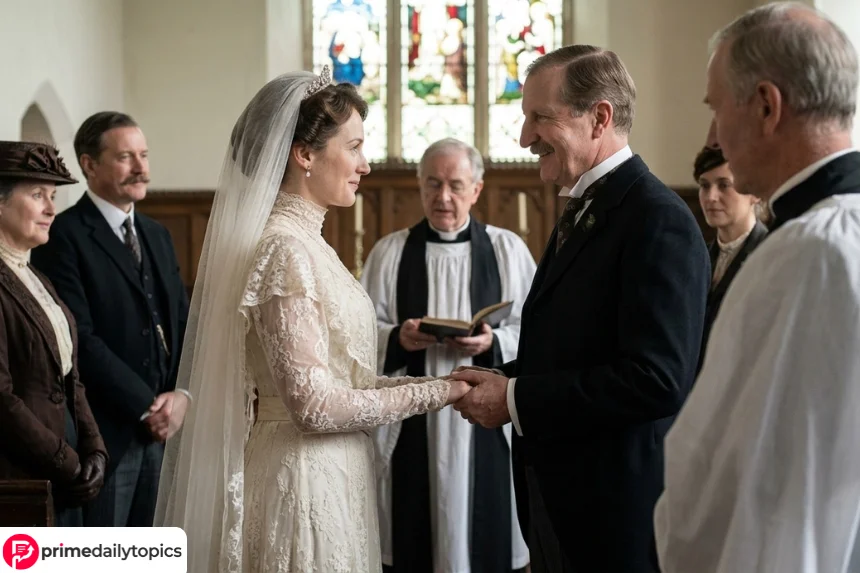
William married Eliza Davison in Niles, New York, on February 18, 1837. Eliza raised the family during William’s frequent absences and became the household’s stable religious influence.
Together, they had six children: Lucy, John Davison, William Avery Jr., Mary Ann, Franklin, and Frances. Frances died in childhood, while John and William Jr. later became the family’s best-known businessmen.
Nancy Brown and Two Reported Daughters
Biographers report that William had a relationship with Nancy Brown and fathered two daughters, commonly named as Clorinda and Cornelia. However, publicly available information about both daughters remains limited, and online family trees do not provide the same assurance as directly examined civil records.
Therefore, they should be identified as reported children rather than folded into Eliza’s household. This wording also prevents the common mistake of saying Eliza bore eight children.
Margaret Allen and the Levingston Identity
In the mid-1850s, William married Margaret L. Allen in Canada while Eliza was still alive. Sources disagree on whether the ceremony occurred in 1855 or 1856. Nevertheless, the overlap supports the historical description of his second marriage as bigamous.
William lived with Margaret under the Levingston name in several places. Meanwhile, Eliza remained legally connected to him until her death in 1889. The arrangement stayed largely outside public view during William’s lifetime.
William Rockefeller Sr. Timeline
| Date | Event |
|---|---|
| November 13, 1810 | William Avery Rockefeller was born in New York |
| February 18, 1837 | He married Eliza Davison |
| 1838–1845 | Eliza gave birth to the couple’s six children |
| 1849 | Edited histories report an indictment after a sexual-assault allegation; the family later moved within New York |
| 1853 | The Rockefeller household moved to Ohio |
| About 1855–56 | William married Margaret Allen while Eliza was alive and continued using the Levingston identity |
| 1859 | He advanced John $1,000 for a produce partnership and charged 10 percent interest |
| 1880s | He spent time near Park River in Dakota Territory under the Levingston name |
| March 28, 1889 | Eliza Davison Rockefeller died |
| May 11, 1906 | William died in Freeport, Illinois |
| 1908 | Press reporting publicly connected the Levingston double life to John D. Rockefeller’s father |
What Is Verified About the 1849 Criminal Allegation?
Edited historical accounts report that William faced an 1849 indictment arising from a sexual-assault allegation in Cayuga County, New York. However, an indictment records an accusation and legal charge; it is not a conviction.
The available evidence reviewed for this article does not establish that a court convicted him. Therefore, accurate wording should say that he was accused or reportedly indicted. It should not present the alleged act as a proven criminal judgment.
Where Did William Rockefeller Sr. Live and Die?
William’s life crossed several states and territories. His family lived in upstate New York and later moved to Ohio, while William’s travels took him farther west. Moreover, National Historic Landmark documentation summarizes John’s early family setting.
Later, William spent time near Park River in Dakota Territory as Dr. Levingston. In addition, the North Dakota History index records a scholarly article about William Avery Rockefeller’s life in that area.
William died in Freeport, Illinois, on May 11, 1906. Because his November birthday had not yet occurred, he was 95, although some histories call him 96 or describe him as being in his 96th year. Accounts place his burial in Freeport’s Oakland Cemetery under the Levingston surname.
His exact birthplace remains less certain. Some sources say Ancram, while others name Granger or Grangerville, New York. Consequently, “born in New York” is the most defensible short answer unless a directly examined original record settles the locality.
William Rockefeller Sr. Net Worth: What Can Be Verified?
No authoritative financial source confirms William Rockefeller Sr.’s net worth, salary, income, or estate value. He handled money, owned or traded property, and made private loans; however, those facts do not support a precise modern estimate.
The most common confusion comes from his son. Reports of an estate worth roughly $100 million concern William Avery Rockefeller Jr., the Standard Oil financier who died in 1922. Therefore, that figure must not appear as William Sr.’s wealth.
What Is William Rockefeller Sr.’s Historical Legacy?
William’s legacy lies more in family history than in a company or public institution. His unsettled work, financial lessons, disappearances, and double life formed part of John D. Rockefeller’s early environment. However, John transformed those experiences through his mother’s discipline, his own bookkeeping habits, and later partnerships.
William also shows why historical identity control matters. A shared name can turn a traveling seller into a Standard Oil executive with a vast estate in just a few copied sentences. Consequently, good biography research must compare dates, relatives, occupations, and source quality before joining claims.
Moreover, comparing life dates before career details prevents the most damaging error: assigning one relative’s achievements, controversies, or fortune to another.
Finally, the surviving archival record gives researchers a path beyond folklore. The Rockefeller Archive Center holds family photographs and papers, while government and historical collections document places connected with the family. Ultimately, those records provide a firmer foundation than unsourced retellings.
FAQs About William Rockefeller Sr.
1. Who was William Avery Rockefeller?
William Avery Rockefeller Sr. was a traveling patent-medicine seller, trader, and lender who lived from 1810 to 1906. Moreover, he was the father of John D. Rockefeller and Standard Oil co-founder William Avery Rockefeller Jr.
2. Was he John D. Rockefeller’s father?
Yes. William Avery Rockefeller Sr. and Eliza Davison were John D. Rockefeller’s parents. However, Eliza provided the more consistent presence during John’s childhood.
3. Did he found Standard Oil?
No. John D. Rockefeller, William Avery Rockefeller Jr., and their associates organized Standard Oil in 1870. Therefore, William Sr. should not be listed as a founder or executive.
4. Why was he called “Devil Bill”?
The nickname reflected his reputation for deception, showmanship, long absences, and an unconventional private life. Nevertheless, it does not verify every colorful story later told about him.
5. Was he a real doctor?
No recognized medical credential has been independently verified. Instead, he called himself a botanic physician and used the name Dr. William Levingston while selling remedies.
6. Who were his wives?
He married Eliza Davison in 1837. Later, he married Margaret L. Allen around 1855–56 while Eliza was still alive, which historians describe as bigamy.
7. How many children did he have?
He and Eliza had six children. In addition, biographers report that he fathered two daughters with Nancy Brown, although publicly available documentation about them remains limited.
8. Did he lend John D. Rockefeller money?
Yes. In 1859, he advanced John $1,000 for a produce partnership and charged 10 percent interest. John later described the transaction in his memoir.
9. What was his net worth?
No authoritative source confirms a reliable figure. Consequently, estimates that borrow William Jr.’s Standard Oil fortune should be rejected.
10. When and where did he die?
He died on May 11, 1906, in Freeport, Illinois, at age 95. Accounts say he was buried at Oakland Cemetery under the name William Levingston.
Conclusion: Understanding William Rockefeller Sr.
William Rockefeller Sr. was a traveling seller, trader, and self-styled doctor whose hidden Levingston identity made him one of the Rockefeller family’s most unusual figures. However, the verified record is more precise than the legend: he influenced John D. Rockefeller’s early business education, but he did not found Standard Oil and has no confirmed net-worth figure.
Therefore, the clearest biography separates William Sr. from William Jr., labels allegations accurately, and acknowledges unresolved details. That approach preserves the compelling history without turning repetition into proof.
Read more at Seyyed Mohammad Khamenei
